St Neots’ sporting heroes

If you’re thinking of taking up a new sport or joining an exercise class this January, then you’ll be in good company! St Neots has a proud sporting heritage, much of which is celebrated in the museum with displays on some of the town’s sporting heroes…

Until the industrial revolution of the early 1800s, everyday life was strenuous enough to keep most working people fit.  Many local men were farm workers, and women’s lives, before the invention of the modern washing machine and vacuum cleaner, involved daily heavy labour. It was during the early Victorian period, as the population increased dramatically and people began to move away from the land and into towns, that organised team games for men (sadly there were very few organised women’s sports at that period!) began to become popular.

St Neots Rowing Club Eight in 1947

When the Reverend William Maule became the Rector of Eynesbury in 1851, a talented and experienced sportsman arrived in the town. Maule excelled at cricket and rowing, and while at Trinity College, Cambridge he’d been President of the Trinity Boat Club. By 1865 he had established St Neots Rowing Club which produced many fine rowers, including Laurie Evans, who was a member of many winning crews in the 1920s and 1930s.

As the enthusiasm for organised sports grew, many new clubs were formed in the town. St Neots Cricket Club, dating back to the 1840s, has had a chequered career, but other sports thrived. Cycling also took off as a sport in the late Victorian period, after Dunlop patented the pneumatic tyre in 1888, and the St Neots Cycling Club formed as early as 1887. An early champion of the club was E. J. Bass of Eynesbury who was a rider of national importance. The photograph below is thought to show him in 1899 after he had won the mile race at the Spring meeting of the Surrey Cycling Club, held at the Kennington Oval (one of the most important meetings of the cycling calendar). The First Prize of a silver claret jug and silver beakers can be seen in the photograph.

E.J Bass, 1899

Another talented sportsman who threw himself into the sporting life of the town was C.G. Tebbutt, who moved to the town from Bluntisham in 1889. Not only was he a gifted skater and ice hockey (bandy) player, he was also an outstanding speed skater holding three world speed skating records in 1891. At different times in the 1890s, Tebbutt captained both the St Neots football club and the cricket club.

Champion jockey Otto Madden was also educated at the Eaton Socon Academy, Peppercorns Lane in the 1880s.  He was the most successful British jockey between 1888 and 1918, and Champion Jockey in 1898, 1901 and 1903.

Women were also keen sports players, but found it much harder to break into the world of organised sports. However, Eaton Socon Ladies’ Hockey Club formed in late 1898, and already by 1894, St Neots Golf Club (founded 1890) was holding a Ladies Monthly Prize competition, with a final in the April of the following year.

St Neots & District Football Club, 1925

Football became an increasingly important part of national life in the 1950s and 1960s, several local boys became professional players, including Chris Turner, Terry Oakley and Christopher Jones. The most well-known of our local footballing hero’s was John Gregory of Longsands school, who played for England in the 1983 – 84 season and later went on to a successful career as a team coach and manager.

As the opportunities for ice hockey declined with warmer winters, and with the development of the Little Barford Power Station upstream of St Neots Common, field hockey became a popular sport, with the St Neots club boasting teams of both men and women players. The town’s moment of glory in the hockey world came when local player, Anthony Ekins, was selected to play for both England and Great Britain between 1966 and 1972. He played for Great Britain in the 1968 Mexico Olympics and captained the British team at the Munich Olympics in 1972. More recently, the triumph of the GB women’s hockey team, who took Gold at the 2016 Rio Olympics, has made hockey the fastest growing participation sport in the UK.

Hockey match with Tony Ekins on far right, about1970

Many other sports flourished in the post war period. Philip Cole played table tennis at county level and was National Student Table Tennis Champion in 1982. The St Neots Outdoor Bowls Club was formed in 1920, and member Joyce Brittain, nėe Hodson, was a very talented outdoor and indoor bowls player. She reigned as the Cambridgeshire Ladies Singles Champion for most of the 1950s, and played outdoor bowls for England to International level in 1961 – 63. Her son, Roger Brittain, was also an excellent bowls player at both club and county level.

Finally, in the twenty-first century running has become an increasingly popular sport, with thousands of people taking to the pavements. The St Neots Riverside Runners were established in 1987 and remain a very successful club, organising many local runs including the Riverside 10K run and the St Neots Half Marathon.

It’s impossible to cover everything in this brief article, so if you have any information and / or photographs about local sports that you would like to pass on to St Neots Museum, please do contact the Director via email at director@stneotsmuseum.org.uk. Photographs can be copied and returned.

Yule – Christmas’ Pagan ancestor

The 21st December is the Winter Solstice, which traditionally marks the beginning of Yule, a pre-Christian festival still in part celebrated in Scandinavian and Germanic societies. Whilst it’s easy to get wrapped up (pun intended) in the jollities and frivolities of Christmas, we thought we’d take a moment to look at its distinctly pagan roots…

Odin by Carl Emil Doepler (1824-1905)

Like with many pagan beliefs, Yule is centred around the sun. The modern word ‘Yule’ has a few possible etymological origins; in Old Norse Jól or Jul could refer to a feast to the sun, and formed part of one of the many names given to the chief god Odin who was often known as the Jólfadr or Yul-father due to his strong association with the sun. It could also be used as a general term attributed to the gods associated with the Yule festival – the Jólnar or ‘Yule-Ones’.

In Anglo-Saxon, the word hwéol is attributed to meaning ‘wheel’, and was associated with the ‘wheeling points’ that the sun travels through throughout the year (the summer and winter solstices being two such points). In addition, géol or geōla, was the name attributed to a month of the year which fell between modern December and January… So you can see, it’s hard to pin the etymology down for sure!

Yule and reverence to the sun

Though the possible origins of Yule may be varied, in Germanic, Celtic and Saxon societies, the significance of the Yule period and the celebrations attributed to the festival are all broadly the same. Rather than being observed on a single day, Yule begins on the Winter Solstice, and lasts from 12days to a month, depending on the belief system. Interestingly, though the Winter Solstice normally falls on the 21st/22nd December in our modern calendar, under the Julian Calendar (named after the emperor Julius Caesar), the solstice actually fell on the 25th December itself.

Die Gartenlaube (1880) Illustration of an ancient Nordic Yule Festival

For early societies, December was a bleak and uncertain time of the year, and the fear that the sun may not return unless appeased drove the practices associated with Yule. On the solstice and the 12 days following, Celts welcomed the ‘new’ sun, though its arrival was by no means guaranteed. This was a time to pray to the Yule deities to ensure the sun’s return, and that it would bring with it fertile and bountiful lands in the year to come. Feasts were thrown, and fires lit to symbolically ‘recall’ the sun.

The Yule Log

The most well-known tradition associated with Yule involves the ‘Yule Log’, though unsurprisingly, this hasn’t always been made of chocolate like the version that many enjoy today. During the 12day period of Yule, Celtic tribes believed that the sun stood still in the sky, and it was tradition to keep a Yule Log burning to coax it back into moving again, as well as to conquer the darkness and banish evil spirits. Anglo-Saxon tales of the Yule Log, or geolstocc, attest to whole tree trunks being used as the ‘log’, which were progressively fed into the fire as they burnt down. The end of each year’s log was kept in order to light the log in the following year. This, along with the ashes from the log, were kept in order to ward off a range of misfortunes from toothaches and chilblains to hail and even lightning!

Other practices that we’re familiar with today included bringing evergreens, such as holly, ivy and mistletoe, into the home as a reminder of the return spring and new life in the new year. Mistletoe in particular was hung above doorways as a symbol of hospitality and to ward off evil spirits.

Wodan’s Wilde Jagd (Wild Hunt) by F. W. Heine

The ‘Wild Hunt’

For both Norse and Anglo-Saxon societies, certain gods (like the Jólnar mentioned above) were associated with Yule. The chief god Odin (or Woden in Anglo-Saxon) was believed to lead a host of other deities on a ‘wild hunt’ across the night sky, which would carry away the souls of the dead, along with any unsuspecting members of the living if they strayed too far from the hearth at night! Sacrifices were therefore made to ensure the safety of the household, and a ‘Yule Boar’ centrepiece was often part of Yule feasts as a symbolic recognition of the hunt.

Introduction of Christianity

With many pagan traditions such as this, however, the introduction of Christianity ensured that Yule began to take more of a back seat in December celebrations, though references to Yule or ‘Yuletide’ are found peppered throughout history. In Robert Herrick’s book ‘Ceremonies for Christmas’ written in the late 16th century, he makes reference to the Yule Log, saying:

“Come, bring with a noise,
my merry, merry boys,
the Christmas log to the firing”

Yule Log from Robert Chamber Book of Days 1864

Victorians were also keen on the idea of the Yule Log, bringing albeit smaller versions into their homes to burn for 12hours, rather than the 12days as originally practiced. Christmas Trees also became popular in England in this period, the origins of the practice developing from the importance of evergreens in pagan Yule festivities. As for the cake form of the Yule Log, it’s recorded as early as the 19th century, first appearing in the bakeries of Paris.

You may not recognise Yule itself, or celebrate the birth of a new year at the solstice, but elements of the festival will certainly be present in your home. Whether you go for that chocolatey dessert, decorate a Christmas Tree, or have greenery (the real deal or representations) around your home, these elements can all be traced back to this pagan festival celebrated long before Christmas…


However you celebrate the festive season, we wish you a happier and healthier 2021!

St Neots’ Traditional Crafts

As you’ll know, each year we run our Winter Craft and Gift Fair, which showcases the work of local craftspeople and provides a unique venue where modern day local crafts can be celebrated alongside the traditional crafts of the past. The crafts we sell today often mirror those that were once an essential part of life in St Neots. Our curator Liz tells us more…

Huntingdonshire has been an essentially agricultural county for many centuries, growing wheat, barley, oats and vegetables for local people and for distribution to the wider world. In such a rural area, traditional crafts continued to be practised widely until the outbreak of the First World War.

Woodwork

One of local maker Charles Gill’s houseboats c.1905

Woodworking and carpentry are both ancient crafts and, in Edwardian St Neots, Charles Gill was well known as a cabinet maker and also as the maker of the houseboats, which he rented out as holiday homes in the early 1900s. He could turn his hand to almost any sort of woodwork, a even made a lovely wooden box to hold the records of the commemorations for Queen Victoria’s Diamond Jubilee in 1897, which is now on display in the museum.

Basketry

Basket making was another long established craft in St Neots and Eaton Socon, because of the plentiful supply of willow trees growing beside the river and its tributaries. The osier beds (willow trees from which young branches were cut to make the baskets) beside the river still existed until the 1960s, and hundreds of different items could be made from the willow, from hampers to shopping baskets to babies cradles.

Sam Hawkesford, basket maker

Sammy Hawkesford was a well-known local basket maker, carrying on a local craft which dated back to prehistoric times when baskets were used to catch eels and fish in the river Great Ouse. Mr Hawkesford made baskets for local farmers and market gardeners, though despite his hard work, prices were very low at ten shillings (50p) for a dozen round bushel baskets!

Metalworks

The blacksmith and farrier were also essential local craftsman until well into the 1940s. Horses were used on every farm and, until the First World War, for all types of transport, regularly needing new shoes. The well-known local company of Ibbett’s at Great Paxton began life in the 1850s as a blacksmiths shop behind Brook Street, St Neots. As farming methods and machinery changed though, they became agricultural engineers, and by the time Cyril Ibbett took over the business from his father in 1939 they had also begun importing and selling farm machinery.

Ibbetts Blacksmiths & Agricultural Engineers c1900

Textiles

In the Victorian period, the invention of the sewing machine led to the mass production of clothing, but many tailors, dressmakers and milliners continued to thrive in rural areas like St Neots. Mr F. C. Riseley advertised millinery and dressmaking ‘by experienced hands’ in his advert of September 1914 in St Neots Advertiser, and Rowell and Sons advertised ‘costumes to measure from 47/6’ (£2.37 in modern money!) Rowell’s advert also emphasised the craft involved in their work, stating that their clothes were:

‘Correct in cut and style, perfect in workmanship and finish. We are prepared, for a moderate price, to give you tailoring that for correctness in every detail of cut and fit cannot be exceeded in our district.’

Stay tuned for more about local crafts in a future post, and do stop into our modern day Craft Fair at the Museum, open from 11am-4pm until 23rd December!

St Neots and the fight against slavery in the 19th century

As a small Victorian market town, St Neots may be imagined as a quiet and parochial place, but through trade, business and personal links, St Neots people had contacts across the world…

On the 12th October 1886, Frederick Douglass, the most famous black American of the Victorian era, visited St Neots and was invited to speak at the Corn Exchange. His lecture ‘Recollections of the Anti-Slavery conflict in America’ was given to the St Neots Wesleyan Circuit, where he recalled his early life in slavery. A quote from him in the St Neots Advertiser states that “[his] slave life, terrible as it was, had now lost much of its horrors, and slept in his memory like the dim outlines of a half forgotten dream.”

Frederick Douglass

Corn Exchange, 1860

Douglass was an African American man who, in 1838, had escaped from slavery in Maryland on the east coast of America. Likely the child of an enslaved black woman and her white slave master, Douglass was brought up as a slave and made to serve various masters in his early life. In his first autobiography ‘Narrative of the Life of Frederick Douglass, An American Slave’ he spoke of the harsh and violent treatment of slaves, his own struggle for education and his escape to freedom in Massachusetts. After his escape, he was supported by other free black Americans and the many Anti-Slavery societies who were working for the end of slavery in America.

Frederick Douglass became one of the most prominent activists, authors, and orators of the Victorian era. As a leader of the abolitionist movement, Douglass toured the United States, and later the world, speaking out on human rights. Despite being physically assaulted several times by anti-abolitionist throughout his life, he continued for fighting for equality right up to his death in 1885. In a powerful and memorable quote, Douglass states: “If there is no struggle, there is no progress. Those who profess to favour freedom, and yet depreciate agitation, are men who want crops without ploughing up the ground.” 

Douglass’ connection to St Neots

In 1886, Frederick Douglass travelled to St Neots to deliver a new lecture and to stay with his friend of over 40 years, Julia Griffiths Crofts. Douglass and Griffiths had first met in 1846 when Douglass had come to Britain on a lecture tour to spread his message on the abolition of slavery and promotion of civil rights to black men and, controversially, also women. Julia Griffiths (as she was then) was drawn to Douglass message and, already with strong family connections to British anti-slavery societies, began work to raise funds to support Douglass’ work.

Ticket to hear Frederick Douglass speak in 1886

On 1849 Julia and her sister, Eliza, travelled to America to work more closely with Douglass. By this date Douglass had set up his own newspaper in Rochester, New York and by early 1850 Julia was helping to write and edit the newspaper, as well as signing up subscribers and raising funds for the paper. Julia stayed in America until June 1855 when she returned to Britain, but she still continued to support Douglass’ work through fundraising and speaking engagements. The pair kept up a regular correspondence for the rest of their lives.

Julia’s life after America

In 1859 Julia married the Rev. Dr. Henry Crofts, a Methodist Minister and widower, and became a mother to his three young girls. For many years they travelled through the north of England on the Methodist preaching circuit, until 1877 when the Rev. Crofts retired to St Neots. Sadly he only lived another year and left Julia a widow.

Spa House

To support herself, Julia opened a girls day and boarding school at Spa House, which stood on The Cross, at the top of St Neots High Street on the corner of Cambridge Street and Church Street, where Kwellers Café stands today. It was here that Frederick Douglass visited her in October 1886 while he was on a lecture tour of Europe with his second wife, Helen.

Sadly, there are no known photographs of Julia Griffiths, and all that remains of Douglass visit to St Neots is a ticket for the lecture and a report in the local paper. Although Julia Griffiths Crofts is hardly known in St Neots today, in America, many of her letters to Douglass are preserved in the Frederick Douglass collection in the US Library of Congress and can be accessed online, here. Do give them a read!

Seasonal treats – Why certain foods are associated with Halloween

At this time of year, we crave certain comfort food: pumpkin pies, toffee apples, chocolate (in any form!) … But have you ever wondered why certain foods have become associated with Halloween? Well, wonder no more…

Pumpkins lanterns

Our dino pumpkin for this Halloween

First up (of course!) is the pumpkin, and you might be surprised to hear that the carving of pumpkin lanterns (or ‘Jack-o’-lanterns’) for Halloween, likely originated in Ireland from local folklore, and not from America. Originally, turnips or large potatoes were used to carve the lanterns, until Irish migrants took their stories over to America, and, once there, discovered the superior carving qualities of pumpkins!

The story behind these lanterns concerns a miserly and unpleasant character known as ‘Stingy Jack’. As with most folklore, there are a number of versions of his tale, but all recount how Stingy Jack once tricked the Devil into turning himself into a sixpence in exchange for his soul. Instead of using the sixpence to buy himself one last drink (as promised) before his damnation, Jack quickly pocketed it, and kept it securely next to a silver crucifix, preventing the Devil from escaping. In exchange for his freedom, Jack forced the Devil to grant him ten more years of life before returning to claim his soul, to which the Devil reluctantly agreed.

Traditional Irish Halloween Jack’o-Lantern

Ten years passed and the Devil once again returned to claim Jack’s soul, but true to form, Jack managed to trick the trickster again, this time trapping him in an apple tree by carving a crucifix into its trunk (you’d think the Devil would’ve seen it coming). Feeling a bit cocky after his latest triumph, in addition to another ten years of life, Jack made the Devil promise that when the time came for him to die, the Devil would relinquish his claim to his soul. The Devil agreed (and was probably fairly happy to be rid of Jack).

Unfortunately for Jack, that’s where his fun ended. When the time came for Jack to die, and he stood at the pearly gates to heaven, he was dismayed to find that God didn’t want anything to do with him either. So now, having been denied entry to both Heaven and Hell, legend has it that Stingy Jack’s spirit is forced to wander the earth for eternity. His only possession as he traipses on his endless path, is a lump of coal burning with hellfire and placed inside a hollowed-out turnip, which Jack uses as a lantern to light his way. Spooky!

The goddess Pomona by Nicolas Fouché

Auspicious apples

Apples are also a food we often associate with Halloween, and like the pumpkin, this could partially stem from the seasonality of the fruit, which peaks at this time of year. But the significance of apples is also deep-rooted in mythology and folklore. Celtic and Pagan tradition placed apples as powerful sources for divination and prophecy, and when the Roman’s came to Britain, they brought their own prophetic associations with the humble fruit.

On the 1st of November, the Romans celebrated a harvest festival dedicated to the goddess Pomona, goddess of plenty and abundance. Part of the festivities involved unmarried, young people attempting to bite into an apple floating in water or suspended from a string. The first to bite into the apple would be deemed next in line to marry. This tradition became embedded in Celtic festivals, like Samhain, and has naturally been adopted into Halloween celebrations. One of the colloquial names given to the 31st October, in Britain at least, was ‘Snap-Apple Night’, deriving from this practice, and later developing into the modern Halloween game of ‘Bobbing-for-Apples’.

Sweet treats for the dead

If you’ve read our blog post on Samhain, you’ll know that this Pagan festival was celebrated over the 31st October – 1st November to mark the last harvest of the year, the start of winter, and as a time to remember the dead. As part of the festivities, offerings of food were left for the spirits, either thrown on the scared bonfire or left on the doorstep of the home.

‘Souling’ on Halloween, from St. Nicholas: An Illustrated Magazine for Young Folks, 1892

The act of leaving food as an offering to the dead is a tradition that can be found throughout the world; the Ancient Egyptians left food inside tombs to help nourish the soul on its journey to the afterlife, and feasts honouring the dead at the grave side is a common practice in many cultures, perhaps the most well-known taking place in Mexico on the Día de los Muertos, or the ‘Day of the Dead.’

In Christianity, the tradition of leaving something sweet to honour the dead became more prominent. On the 1st of November, Christians celebrate the feasts of ‘All Saints and All Souls’, renaming the 31st October ‘All-Hallows Eve’ or ‘Hallow’een’. As part of this new tradition, ‘soul cakes’ (small cakes or pastries usually baked with spices, currants and saffron) were customarily baked and distributed as alms to the poor. Prayers to the dead were said as the cakes were consumed, and the ritual became known as ‘souling’ – (Terry Pratchett fans may be disheartened to hear, however, that there’s sadly no reference to a ‘Soul-Cake Duck’).

Perhaps these traditions of leaving food as an offering to the dead, combined with the ‘sweet’ element of the soul-cakes, gave some origin to Halloween’s modern association with distributing sweets and chocolate to the rowdy ‘spirits’ (‘trick-or-treaters’) that now knock on our own doors at this time of year…

So, whether you’re marking Samhain with apple-bobbing, All Hallows Eve with a soul-cake, or Halloween with a carved ‘Jack’o-Lantern’, you’ll be able to take a minute to reflect on how these traditions have come about.

Samhain – The precursor to Halloween

The leaves are changing colour and the nights are drawing in, which means that Halloween is just around the corner! But did you know that Halloween isn’t the first festival to be celebrated on the eve of the 31st October? We’ll hand over to volunteer Emily to tell us more…

Samhain is an ancient Celtic festival which has been commemorated by some Pagans (in the Northern Hemisphere at least) since around the time Stonehenge was constructed. It’s celebrated between sunrise on 31st October until sunset on 1st November, and it’s thought that the holiday of ‘Halloween’, as we know it today, derives from this festival.

Madingley Bonfire, picture credit Emily Fleming

The start of darker days

Samhain, meaning ‘summer’s end’ is a time to celebrate the dead; it’s a time when the land of the living can most easily interact with the land of the dead. The festival marks the beginning of winter and the ‘darker half’ of the year, but it also heralds the start of the old Celtic new year. Samhain is traditionally a time for regeneration and reflection. Today, some Pagans still practice ways of marking the event, but how did our ancient ancestors do it?

Fire and ritual

Traditional rituals focused around the fire. Hearths in the family home were kept lit while the harvest was gathered, and left to die down and to eventually go out. The hearth was important as it was the heart of the home, it was a place where the family would gather, the source of warmth, and also, like today, where the cooking was done. If the hearth fire was put out by hand, it was believed it would anger the gods, and so it was left to dwindle – the dying fire perhaps symbolising the final passing moments of the year.

Harvesting, Eaton Socon

The fire was only relit after the harvest and the start of the old Celtic new year. The community, alongside Druid priests, would gather to create a sacred bonfire to honour the dead, using a wooden wheel to spark the fire. It was from this fire that a flame was taken back to each home to relight the hearth. The wheel is an important symbol in Pagan religion as it represents the sun and its associated qualities of daylight, warmth and hope. The Pagan year is also divided in a ‘wheel of the year’, marking out the annual cycle of solar festivals such as Samhain, Ostara (the Spring Equinox) and Litha (Summer Solstice).

Festivals and feasts

The Pagan wheel of life

Along with the ritual element, Samhain would also have been a time to celebrate. People from the community would have brought harvest food for a great feast, and some would even wear costumes made from animal skins or heads. The offering of cattle bones onto the bonfire would also have played a key part in proceedings, and in fact the name ‘bonfire’ derives from this ‘bone fire’.

Amidst all the festivities there was a darker side, however, and there could be a price to pay if you didn’t make an offering or take part in proceedings. The deities associated with the festival would be very cross indeed, and their punishment? It could be illness or even death. You really had to keep the gods onside or suffer as a result.

Samhain today

Samhain is still observed by some Pagans today, though these days the celebrations are a little more private. Feasting still plays an important part in observing the festival, along with private prayer and small ceremonies in the home. Apple-bobbing might form part of festivities, and small bonfires may be lit. Time is also spent outdoors appreciating nature, and altars to the ancestors are set up.

Remembrance of the dead remains the focus throughout. At its core, Samhain is a chance to reconnect with passed loved ones and celebrate their lives. Although the modern, more commercialised version of ‘Halloween’ now dominates the date today, it’s important for us to reflect on its spiritual origins, to pause, and offer a moment’s reverence.

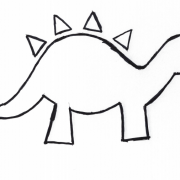
Halloween Pumpkin Template

Fancy carving your very own dinosaur pumpkin this Halloween? Just download our template to use as a guide. You can cut it out and draw the image directly on to your pumpkin to help you recreate the design. Don’t forget to share your pumpkins with us on social media @StNeotsMuseum.

Dino Pumpkin Template PDF

Edward II & monarchs who met a nasty end!

Historical legend tells us that on the 21st September 1327, King Edward II was brutally murdered at Berkeley Castle, by receiving a red-hot poker to the bottom, yikes!

Though the story may merely be fable (theories from historians differ as to the method of his murder, or indeed whether he was murdered at all!), we thought we’d recount the circumstances of his death, and take look at three other nasty ways historical monarchs supposedly met their end…

A brief round-up of his reign

Strong-leadership and ruling capability were sadly two key qualities that Edward II of England lacked. Within the first few years of his reign, he’d angered the powerful barons of England by gifting high offices to his father’s (Edward I) opponents, and to his own favourites; most notably his close friend (and supposed lover) Piers Gaveston. This poor decision making in the eyes of the barons, led to a series of Ordinances put in place against the king, restricting his powers and banishing his favourites into exile. If this wasn’t bad enough, the barons also blamed Edward for gifting Scotland its independence from England, after he lost badly to Robert the Bruce at the Battle of Bannockburn in 1314. On top of that, his tumultuous relationship with his wife, Isabella of France, resulted in her invading Britain from France in 1326 with her exiled lover, Roger Mortimer (another powerful opponent to the king). This led ultimately to Edward’s deposition as king and imprisonment in 1327. Phew, are you keeping up?

A gruesome death?

Berkeley Castle, Gloucestershire

Edward was imprisoned for many months, constantly moved from prison to prison to keep him out of reach of supporters who would free him. He was placed in permanent captivity at Berkeley Castle in the summer of 1327, where legend tells us he was brutally murdered by a red-hot poker inserted into his rear – the method suggested to be in reference to his supposed homosexual relations with his past favourite, Gaveston. Whether this was his actual fate or not, Edward was not heard from again after this date. Most historians believe that he did indeed die at the castle by some means or other, his demise simplifying the political situation for his captors. However, the rumours of this method of death only began to circulate after the execution of his rival Roger Mortimer in 1330, likely as deliberate propaganda spread against Mortimer’s faction. Whether Edward did indeed meet with such a grisly fate, then, remains a mystery.

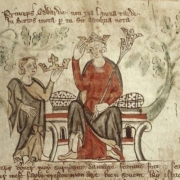
Edmund Ironside, Royal MS, 14B.VI

Edmund Ironside

Another monarch who supposedly met a similar fate to Edward was Edmund Ironside, who ruled England briefly in 1016AD. He’d been forced to divide the ruler-ship of England with the Danish King Cnut after losing to him in battle. The terms of this agreement stipulated that it would remain in force until the death of one of the participants, at which time all lands would revert to the survivor. A term that was just asking for trouble!

According to Henry of Huntingdon, and other royal sources, Edmund was staying at the house of Eadric Streona of Mercia, the duke who had cost him his defeat to Cnut by fleeing the battle field. When Edmund got up in the night “to do the duty of nature”, Eadric’s son, hiding in the pit beneath the toilet seat, reportedly “pierced the king among his private parts twice with a sharp dagger”. Nasty! Though Cnut was not implicated directly in the assassination, it was suggested that he might just have had a hand in Edmund’s unfortunate demise.

Henry I

Lamprey, with those teeth!

Henry I, who granted important royal privileges to St Neots priory in the 12th century, was the youngest son of William the Conqueror, and ruled England from 1100-1135AD. He had a fairly successful reign, achieving domestic peace in England, as well as English territories in Normandy. In 1135, despite ill-health, the ageing Henry took a trip to Normandy to see his two grandsons. Once there he fell iller still, and according to ‘trusty’ chronicler Henry of Huntingdon, once again, died from a terrible case of food poising after over indulging in “a surfeit of” lampreys, which his doctors had forbidden him to eat. We don’t blame them, have you ever seen a lamprey? Yikes!

Parade armour of Henry II, held in the Met Museum

Henry II of France

Henry II was a keen hunter and jouster, both notoriously dangerous sports! In June 1559 a tournament was held in Paris to celebrate a peace treaty between France and Spain, and King Henry entered the lists. Halfway through the tournament it was reported that Henry had started suffering dizziness after his physical efforts, and was almost unseated from him horse in a jousting match against the Count of Montgomery. After this, his wife, Queen Catherine de Medici, tried to persuade the king to call it a day, but Henry was having none of it, and insisted on another contest with Montgomery. This time, Montgomery’s lance struck the king’s helmet, and a long splinter pierced Henry’s eye and penetrated his brain *winces*. Bleeding and almost unconscious, Henry was carried back to his royal apartments, where surgeons removed the splinters from his head and neck. Amazingly Henry survived in an unconscious state until the 9th July, when he passed away with Queen Catherine at his bedside.

So, there we have it! Whether it was death by sharp object or eel (with sharp teeth!), the life of a monarch could end in some rather nasty ways!

‘Their finest hour’ – Remembering the Battle of Britain

The 15th September 2020 marks the 80th anniversary of the ‘Battle of Britain’, the title awarded by Churchill to the fight by the British to prevent Nazi Germany invading and conquering Britain in the summer and autumn of 1940.

On 1st September 1939 Germany started the Second World War by invading Poland; as a result, on the 3rd September, Britain and France were forced to declare war on Germany. Immediately following the declaration, however, a quiet period of war (sometimes known as the ‘phoney war’) ensued, as Hitler was unable to advance any of his military plans due to bad weather.

War declared, St Neots Advertiser, 1939

In the Spring 1940, however, the German ‘Blitzkrieg’ or ‘Lightening War’ plans swung into action, when Hitler invaded France.  On the 10th May, as the attack began, the British Prime Minister Neville Chamberlain resigned, and Churchill became the new Prime Minister. The speed of the German advance into France forced the British, French and Belgian troops back to Dunkirk where they used the ‘little ships’ to help evacuate over 338,000 men from the harbour and beaches. Although a retreat, the rescuing of so many experienced troops was a boost for the Allies.

The impact of war in St Neots

In St Neots, the town Council had been busy preparing for war for many months, and by Spring 1940 evacuees from London had arrived, the Black-Out was in place, food rationing had begun, and men had been called up to fight.  Victor Ekins, who lived in New Street, St Neots and whose family ran the cattle market and auction yard, had signed up as a RAF Volunteer Reserve and was already training to be a Spitfire pilot. In June 1940, Víctor was awarded his ‘wings’ as a qualified pilot, just in time to take part in the Battle of Britain which began on the 10th July 1940 when Hitler launched ‘Operation Sea Lion’. Victor flew with Squadron 501, flying with many of the most famous Battle of Britain pilots, including ‘Ginger’ Lacey, Bob Dafforn and Anthony Palmer Tomkinson. He later became the leader of RAF Squadron 19 based at Duxford.

Victor Ekins

Their finest hour

As the Germans planned their aerial bombardment of Britain, it was on 18th June 1940 that Churchill delivered one of his most famous speeches to the British People. He called this phase of the war the ‘Battle of Britain’ and said ‘Hitler knows that he will have to break us in this island or lose the war’… ‘If we can stand up to him, all Europe may be free’ … ‘let us therefore brace ourselves to our duties, and so bear ourselves that, if the British Empire and the Commonwealth last for a thousand years, men will say : ‘This was their finest hour.’

People all over St Neots listened intently to the radio once the Battle of Britain began, hoping no harm would come to local men. However, Victor’s plane was eventually shot down and he was hit by a German bullet. Very luckily, he was able to parachute out of the plane and was rescued when he landed. He survived and was awarded the DFC (Distinguished Flying Cross). Soon he was flying again and was later awarded the MBE (Member of the British Empire) for his outstanding service to his country.

Victor by a Spitfire with Squadron code VIC

On the 15th September 2020, a commemorative plaque was placed on Victor’s old home at 28 New Street, St Neots.

St Neots’ strange link to the Georgian transatlantic slave trade

As communities across the UK have struggled with the rights and wrongs associated with the removal of statues, and other memorials, to those who had links to the slave trade, we took a look at St Neots’ own past links with the trade in human lives.

After some research, our curator discovered an unexpected link through local man John Bellingham who assassinated the British Prime Minister, Spencer Perceval, on 11th May 1812. Perceval was strongly against the slave trade, and his death at the hands of Bellingham, was likely the result of his fight against the anti-abolitionists…

Bellingham’s backstory

John Bellingham, 1816

After spending much of his childhood in St Neots, Bellingham became an accountant and moved to Liverpool where he aspired to become a merchant, hoping to make his fortune through the valuable shipping trade with Russia. Unfortunately, things didn’t work out too well for Bellingham, and on only his second trip to Russia he fell out with his business partner, was accused of being in debt, and imprisoned in Russia for five years. Not a great start! When he was finally released from prison in December 1809, Bellingham returned, penniless, to Liverpool, and once back home, became obsessed with claiming compensation from the British government. Bellingham petitioned everyone from the Prince Regent to the Prime Minister, but was unsuccessful in his attempts.

Perceval’s fight against slavery

Meanwhile, the new Prime Minister, Spencer Perceval, was set in his determination to end the transatlantic slave trade. Although it had officially been abolished in Britain by an Act of Parliament in 1807 (making it a crime to purchase, transport or sell people as slaves), it was so profitable, and had become so embedded in trade between Britain, America, Africa and Europe, that merchants found ways round the Act. Ships were falsely registered under the flags of foreign countries who had not banned slavery, and forged documents to enable the illegal trade to continue. In further attempts to end the trade, Perceval introduced additional powers to prevent ships carrying slaves and to free captured Africans before they were transported to the Americas. He also increased the size of a Royal Navy patrol along the coast of West Africa to inspect any ship suspected of breaking the law!

Spencer Perceval

Unfortunately, Perceval’s new measures, though fully justified, caused such wide-scale disruption to all transatlantic trade, that trade with the United States fell into decline and an economic depression spread across Britain. Particularly badly hit was Liverpool, bringing hardship and unemployment to many in the city. Not surprisingly then, Liverpool merchants felt angry, and blamed Spencer Perceval for their situation, with the Liverpool Mercury suggesting that the ‘assassination of a tyrant’ (Perceval) could only be for the greater good!

A puppet on a string

Now, the wishes of Liverpool merchants to get rid of the Prime Minister merged conveniently with John Bellingham’s desire for justice from the government for his Russian losses. At his later trial in London for Perceval’s assassination, it was revealed that during his five months stay in London in 1812, Bellingham had received mysterious ‘maintenance’ payments which had enabled him to rent a room, purchase pistols, plan his crime and finally carry it out. The late Andro Linklater, who wrote a fascinating book ‘Why Spencer Perceval had to Die’ believed that Bellingham may have received the payments from an American or Liverpool merchant who had indeed decided to act against Perceval. Whatever the motive, measures against the slave trade were dropped soon after the death of Perceval. It’s not beyond the realms of possibility, then, that Bellingham, too caught up in his own feelings of injustice, was an unwitting pawn in the power struggle between the pro and anti-slavery factions.

It was not until the Slavery Abolition Act of 1833, a further 21 years later, that the sale of Africans by the British finally ended. Though the legacy of that terrible trade will continue to have a strong impact for many generations.