Women and the Great War

Initially, women were only expected to encourage men to enlist in the armed forces, but from the day the War was declared they were keen to do all they could to play their part in the conflict.

Within days of the declaration of war local women had set up a working party to make clothes for sick and wounded soldiers and begun to plan for a Red Cross convalescent hospital in St Neots.

Early WWI Poster aimed at Women

British Red Cross Society, Working Parties, St Neots Advertiser, 21st August 1914

St Neots VAD Red Cross Hospital, St Neots Advertiser, 14th August 1914


St Neots Advertiser, 25th September 1914


Garments for the Wounded, Woman’s Weekly 1914

Letter from Harris Marshall of Waresley, St Neots Advertiser, 16th October 1914

Local links with the island of Malta

News that Sergeant Darlow of Tempsford had died of dysentry after serving at the Dardanelles was reported in the paper on 20th August. This small notice highlighted the number of troops who died from illness while fighting in Turkey and the use of the Island of Malta as a major treatment centre for sick troops.

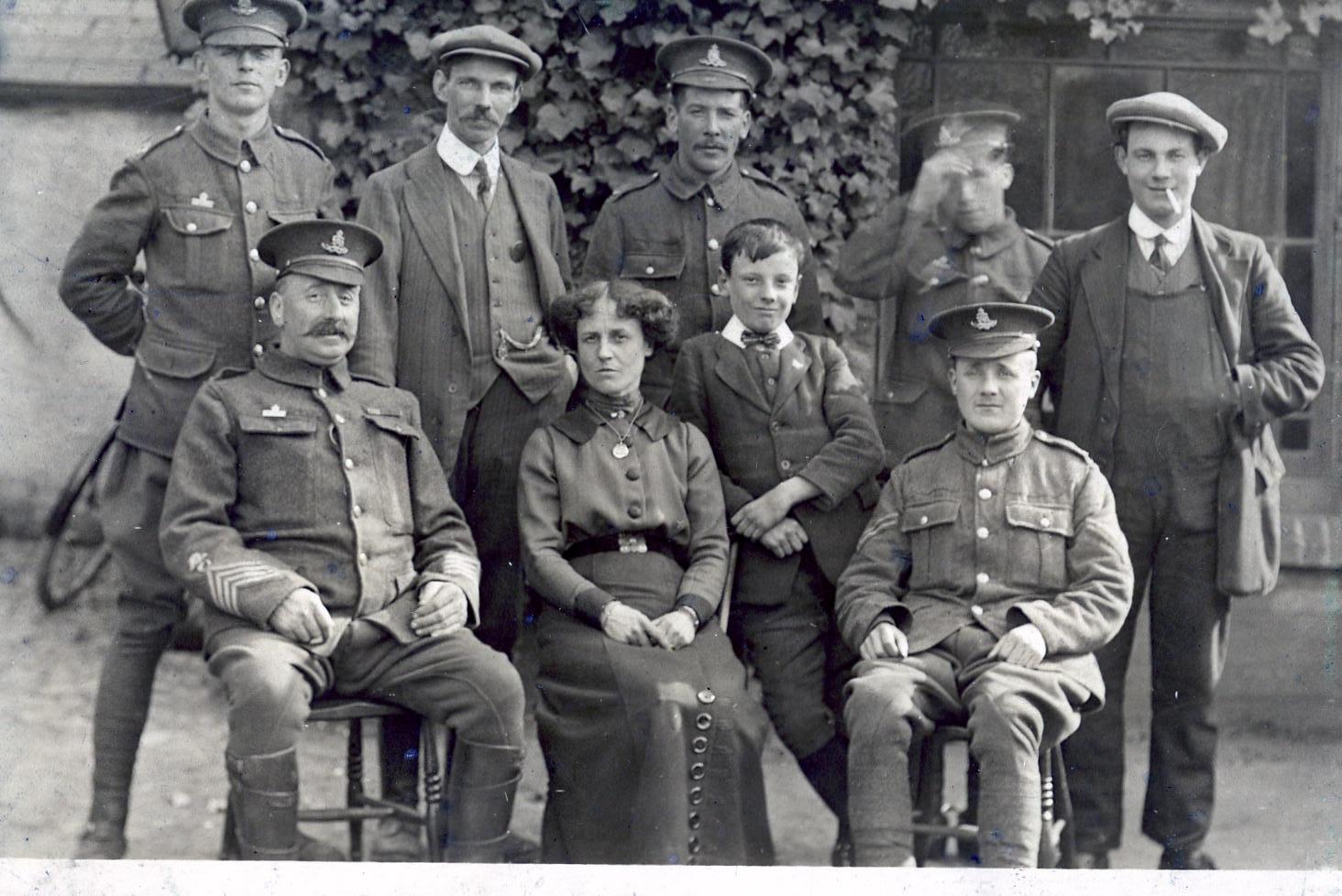
Frank Ibbett, of St Neots, (third from right in the photo) was a professional soldier who had enlisted with the Royal Army Medical Corps., in February 1915, and was based in Malta during the Great War.

As the casualties mounted across the Eastern Front the island of Malta, held by the British since 1800, developed as a hospital centre for soldiers. Over twenty-five hospitals were eventually established on the island and treated over 136,000 men.

Frank Ibbett of the RAMC (Royal Army Medical Corps.) in Malta, 1915

Tempsford’s second victim, St Neots Advertiser, 20th August 1915

The Dardanelles and Gallipoli

In January 1915 Russia asked its Allies (France and Britain) for help to fight the Central Powers (Germany, Austro-Hungary and Turkey) who were attacking them on three Eastern fronts.

The Allies were reluctant to commit troops to the East as this would mean taking them away from the Western Front.

Lord Kitchener suggested a naval attack was the only solution and Winston Churchill, First Lord of the Admiralty, suggested the Dardanelles waterway next to the Gallipoli peninsula, at the entrance to the Black Sea, as a possible target.

British ships began shelling Turkish forts in February 1915.

Naval disaster at the Dardanelles

Albert Tidman of Eynesbury, who was serving with the Royal Navy at the Dardanelles, wrote home to say that he had helped to rescue sailors who had survived the torpedoing of HMS Goliath, when 570 of the 700 strong crew died. Goliath had been providing cover for the soldiers landing on the beaches at Gallipoli.

1/5th Beds at the Dardanelles

The failure of the naval bombing campaign at the Dardanelles led to the decision to send troops to the Gallipoli peninsula.

On the 10th September the St Neots Advertiser published a letter from Sergeant-Major Milton reporting the many challenges of the fighting at Gallipoli; the heat, the dust, the lack of water, the steep hilly terrain, the insects and the Turkish snipers – including women – who could look down on the approaching Allied soldiers and pick them off as they advanced. The death of well-known local man, Captain Rudolph Smythe at the Dardanelles was also announced.

The Gallipoli Peninsula and the Dardanelles

HMS Goliath, sunk on 13th May 1915

Letter from Albert Tidman, St Neots Advertiser, 28th May 1915

ANZAC Cove, Gallipoli, 1915 from the Imperial War Museum archive

Sergt-Major Milton describes life in the Dardanelles, St Neots Advertiser, 10th September 1915

Announcing the death of Captain R. M. Smythe, St Neots Advertiser, 13th August 1915

Trench warfare on the Western Front

By late 1914 both sides had reached stalemate in trenches dug across northern France, but both the British and the German commanders continued to believe that they could achieve ‘breakthrough’ on the Western Front, and crush their enemies.

The British commander, Field Marshall Sir John French, and the French commander, General Joffre, agreed that they would attack the Germans at Neuve Chapelle, close to Lille in France, in March 1915.

The British were well prepared and had a large contingent of experienced Indian troops fighting with them. However, they achieved only limited success for four reasons:

  • New technologies such as the machine gun and gas killed thousands
  • Advancing too quickly cut the troops off from vital supplies
  • Once on the battlefield troops could not communicate with commanders
  • Reinforcements took too long to arrive

As fierce fighting continued men from St Neots and the surrounding villages wrote home with stories and poems, Private Charles Chapman wrote of his ‘extraordinary experiences’ being wounded in France. Private George Corbett of Eaton Ford was gassed at Hill 60, Private Page of Abbotsley had been injured at Neuve Chapelle and was reported to be in hospital in Boulogne and Major Grey William Duberly of Great Staughton was killed leading his men in the capture of a German trench at Neuve Chapelle.

Letter from an Eaton Socon soldier, St Neots Advertiser, 14th May 1915

The experiences of Private C. Chapman of St Neots, St Neots Advertiser, 4th June 1915

Private Page of Abbotsley, ill in hospital at Boulogne from the St Neots & County Times, 13th March 1915

Major G. W. Duberly, killed in 1915, St Neots and County Times, 20th March 1915

Anonymous Poem, published in the St Neots & County Times, 6th March 1915

Early fighting and local casualties

As the German army advanced into Belgium they met unexpectedly strong resistance from Belgian, French and British forces.

The first local man to die was Harry Murphy of Avenue Road, St Neots, who was killed in August 1914 during the BEF (British Expeditionary Force) withdrawal from Mons, Belgium, as German soldiers tried to advance.

Scoutmaster Harris Marshall from Waresley, wrote home to his wife about the Battle of Mons and his letter was published in St Neots Advertiser, 18th September 1914.

Private Holyoake wrote home about the Christmas truce in the trenches of 1914.

Map of the Western Front, 1915

Avenue Road, St Neots, about 1915

Waresley soldier in the trenches, 30th April 1915

Letter from Harris Marshall, Waresley, 18th September 1914


Christmas 1914 Truce letter, 29th January 1915

A new type of industrial warfare

New technological developments in the early 1900s allowed warfare on an industrial scale. By the end of 1916 men with mechanical knowledge were being actively sought by the army to manage and maintain their new equipment.

Steam trains and motor vehicles, enabled vast numbers of men and tons of heavy equipment to be moved swiftly to their destination. Seen here a small boilered “Klondyke” wheels arrangement 4-4-2 designed by H.A. Ivatt.

Aeroplanes, allowed observation of enemy positions and bombing of both military and civilian targets. Portholme Meadow, Huntingdon was used as a training ground by the Royal Flying Corps.

The telegram, telephones and new ‘wireless’ radio, allowed faster communication.

The machine gun, invented in 1883, its recoil action fired 500 – 600 bullets per minute and with bigger and better field guns allowed killing to take place on a never before imagined scale.

War scenes in Ostend, St Neots and County Times Newspapers, March 1915

St Neots railway station, about 1895

Steam train, small boilered “Klondyke”, wheels arrangement 4-4-2, by H.A. Ivatt

Hinsby’s St Neots motor bus, about 1912

Bleriot monoplane at Portholme, Huntingdon, 1910

Mechanical Transport advert, St Neots Advertiser, 15th December 1916

Your Country Needs You!

Recruitment, and Conscription

Throughout the autumn months of 1914 and into 1915 enormous efforts were made to encourage men aged 19 – 30 to join the armed forces. Young men such as James Malin (Jim), an 18 year old building labourer who lived in Cambridge Street, St Neots, enlisted in August 1914.

By June 1915, as casualties mounted, the age of men able to enlist  rose to 35 and by August Huntingdonshire was recruiting for a ‘Bantam’ regiment of men below the usual height requirements for the army.

Conscription

The government realised that voluntary recruitment was not producing enough men and Conscription was introduced in early 1916, with the first exemption tribunal in St Neots reported in the St Neots Advertiser of 18th February 1916. The Tribunal meetings were held in the Magistrates Room, now St Neots Museum.

Many local farmers, manufacturers and shopkeepers applied for exemption for their staff fearing that their businesses would fail if they lost all their staff, many had signed up in the initial rush to enlist in August 1914 and employers were finding it hard to recruit new staff.

For example Mr Cadge, who ran a clothing and shoe shop on St Neots Market Square, asked for Charles Saddington, the manager of his boot department, to be given exemption in May 1916, but this was refused and it was suggested that he could employ a woman to help in the shop.

By September 1916 the local recruiting office was printing the names of men who had not yet enlisted on the front page of the St Neots Advertiser.

5th Bedfordshire Regiment Recruitment advert, 25th June 1915

Bantam Platoon advert, 6th August 1915


St Neots soldier, Private James Malin, 1914

James Malin & the Hunts. Cyclists Battalion ‘D’ Co. Football Team, St Neots Advertiser May 1915

Report of the first meeting of the local Military Tribunal, St Neots Advertiser, 18th February 1916

An advert for Mr Cadge’s working men’s boots, August 1915

Boot Manager Must Go, St Neots Advertiser, 2nd June 1916

The Magistrates Room, New Street, St Neots on the right of the photograph, about 1910

Cartoon postcard of a Military Tribunal, 1916


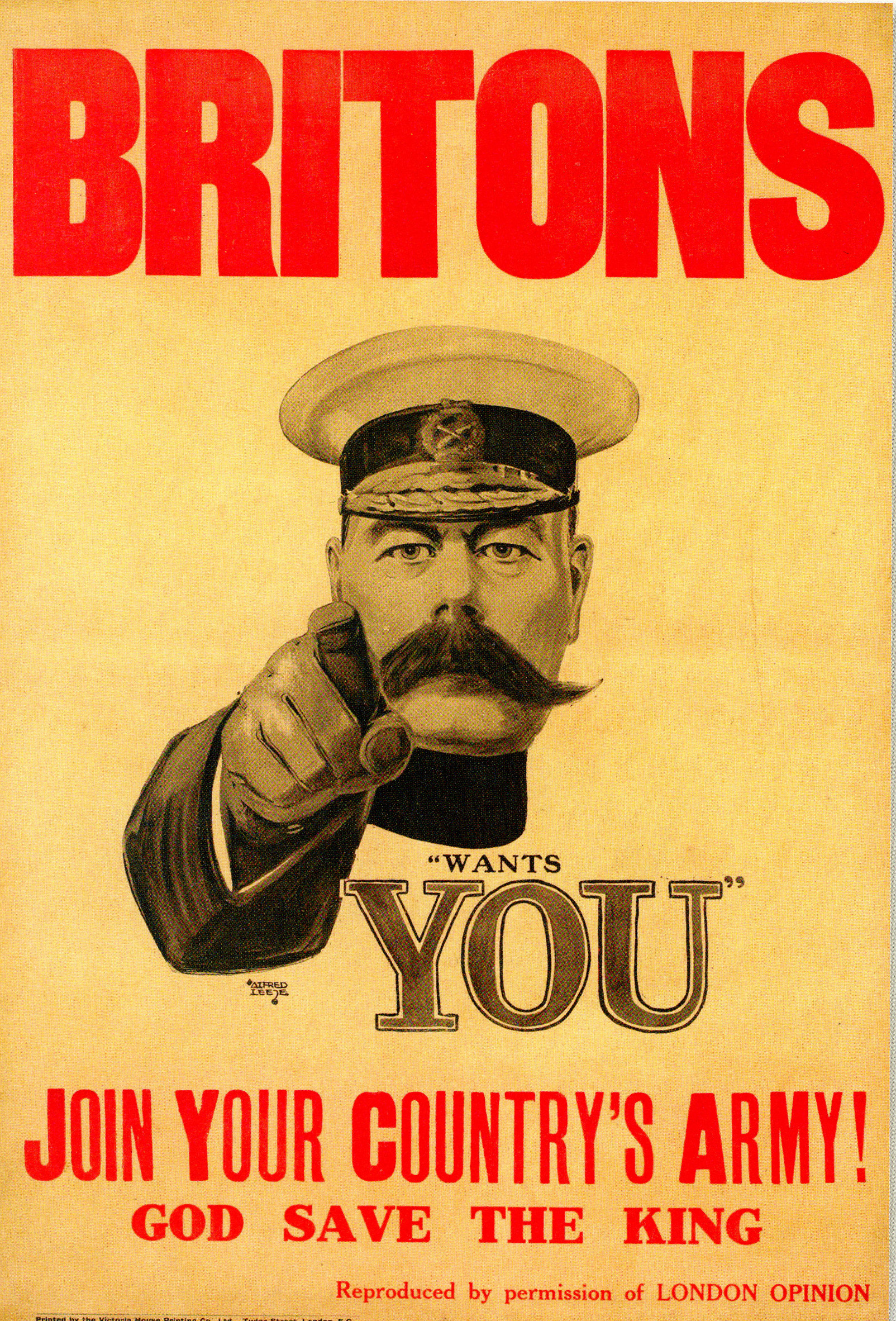
Britons! Your Country Needs You. Poster


St Neots Market Square with the field guns of the 1st Highland Brigade Royal Field Artillery, Aberdeen Battery, Mr R. E. Cadge’s shop is on the left. 

News from the Front

Before computers, television or the radio people obtained important information from the national newspapers which were delivered by train from London. The local newspaper was the St Neots Advertiser and as the war progressed the main source of news was from local men themselves. Men wrote home to relatives or were able to come home on leave, and their letters and stories were then passed to the local paper who printed them on a weekly basis. Graphic accounts of the fighting began to appear in the local paper – albeit weeks after the actual events.

The offices of the St Neots Advertiser, Market Square, 1910

Front page of the St Neots Advertiser, February 1915

St Neots Advertiser appeal for letters, 1st January 1915

Daily Mail postcard, 1916


Daily Mail Postcard, 1916

Letter home to St Neots from Tom Eayrs, 1918

Troops and refugees arrive in St Neots

While local St Neots men were sent to the East coast, the 1st Highland Brigade of the Royal Field Artillery from Aberdeen in Scotland were sent to parts of Bedfordshire, Huntingdonshire and Cambridgeshire for their training.

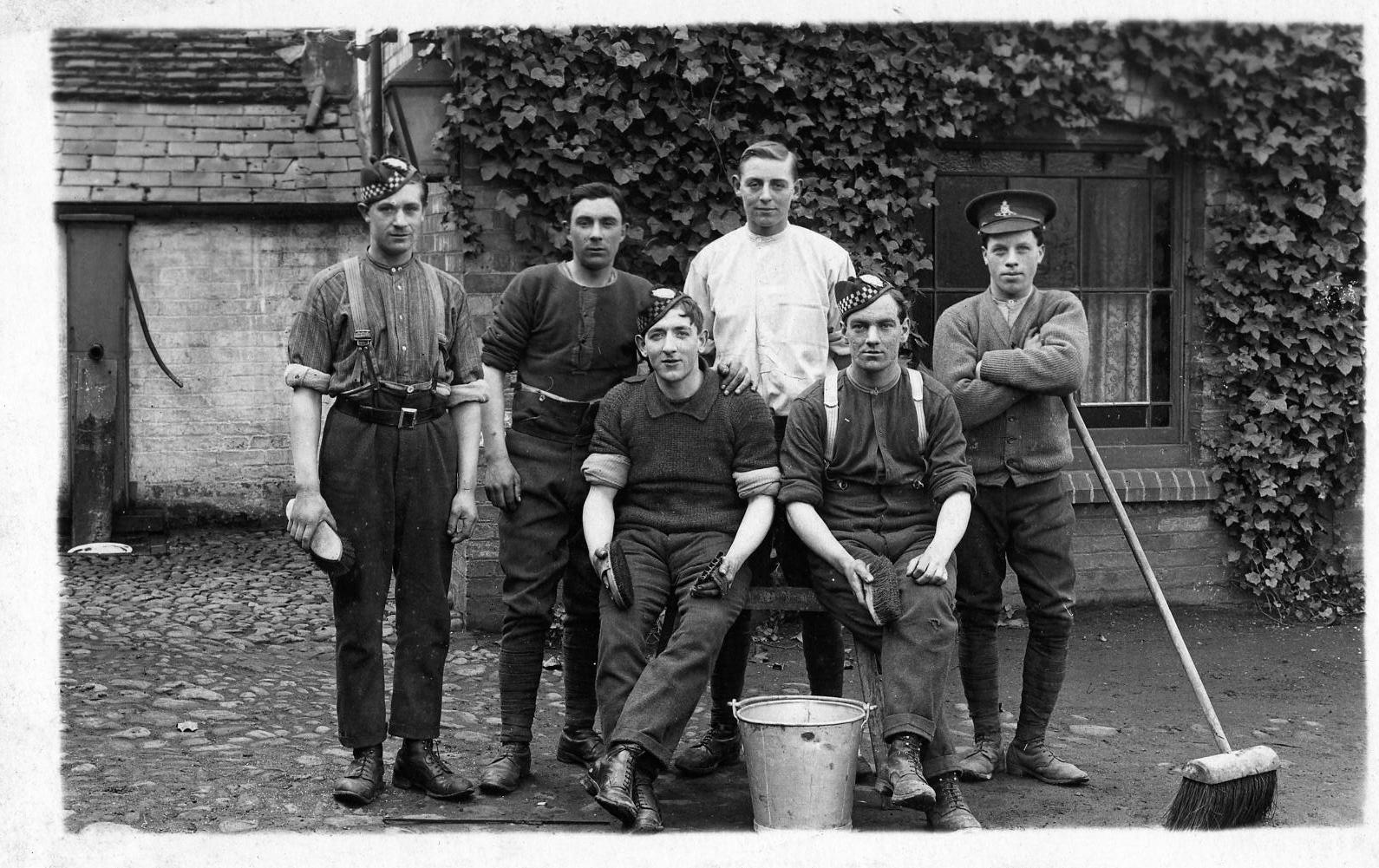
The 3rd City of Aberdeen Battery of the Highland Royal Field Artillery were stationed in St Neots, many men were billeted with local families and quickly became popular with local residents.

The Evans family of Cambridge Street allowed part of their builders yard to be used to stable some of the Royal Artillery horses with blacksmiths using one of their workshops.

The heavy field guns belonging to the Battery were stored close to Priory Park on a field which became known as ‘The Gun Park’. During the very wet winter of 1914 / 15 the guns were moved to the Market Square.

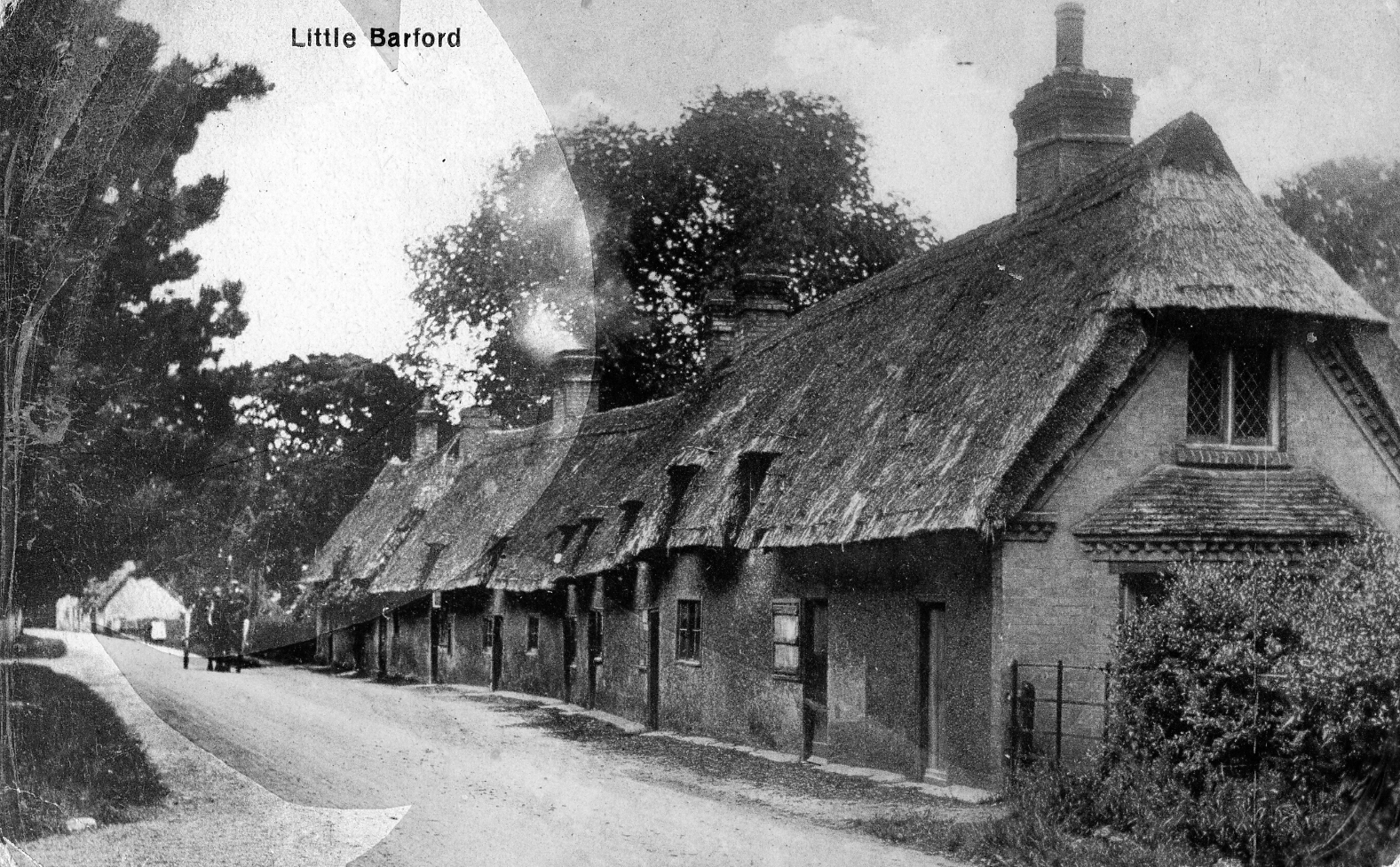
During October 1914 Belgian refugees began to arrive in Britain, driven from their homes by the invading Germans. By the 9th of October the St Neots Advertiser was reporting that Belgian families were arriving at Little Barford.

The 1st Highland Brigade of the Royal Field Artillery in St Neots Market Square, 1914


Aberdeen Battery stablehands, Cambridge Street, St Neots, 1914


The Evans family with members of the Aberdeen Battery, 1914


News of the Belgian Refugees, St Neots Advertiser, 16th October 1914


Cottages at Little Barford, about 1905


St Neots on the edge of war

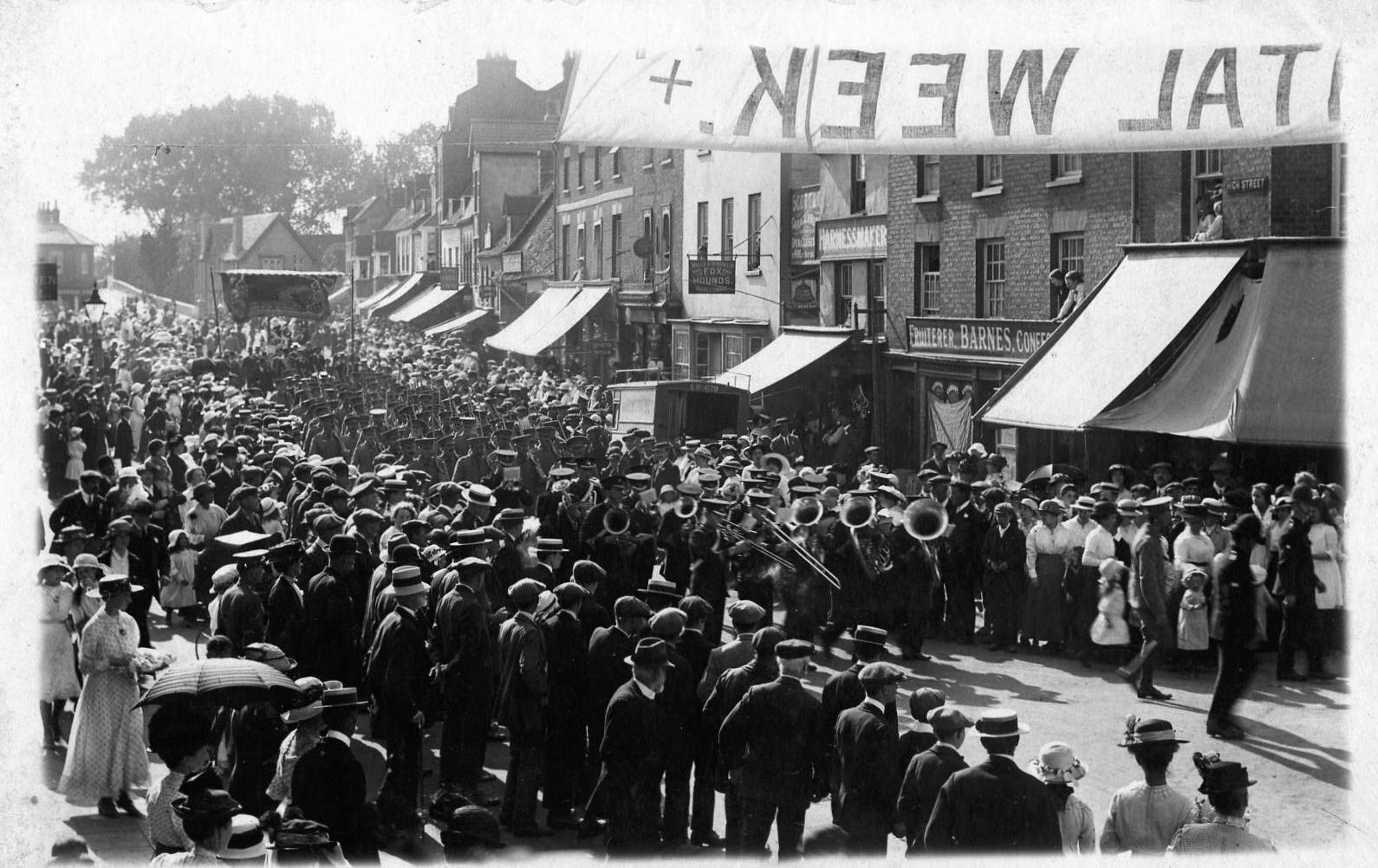
In 1914 the annual Hospital Week Parade in St Neots fell on Sunday 2nd August. With the widespread sense that war was coming a large crowd watched the parade.
All the major community services in the town took part in the Parade including the Salvation Army Band, the Scouts, the Red Cross, the Railway Union, the Fire Brigade and various Friendly Societies.

Call to Arms

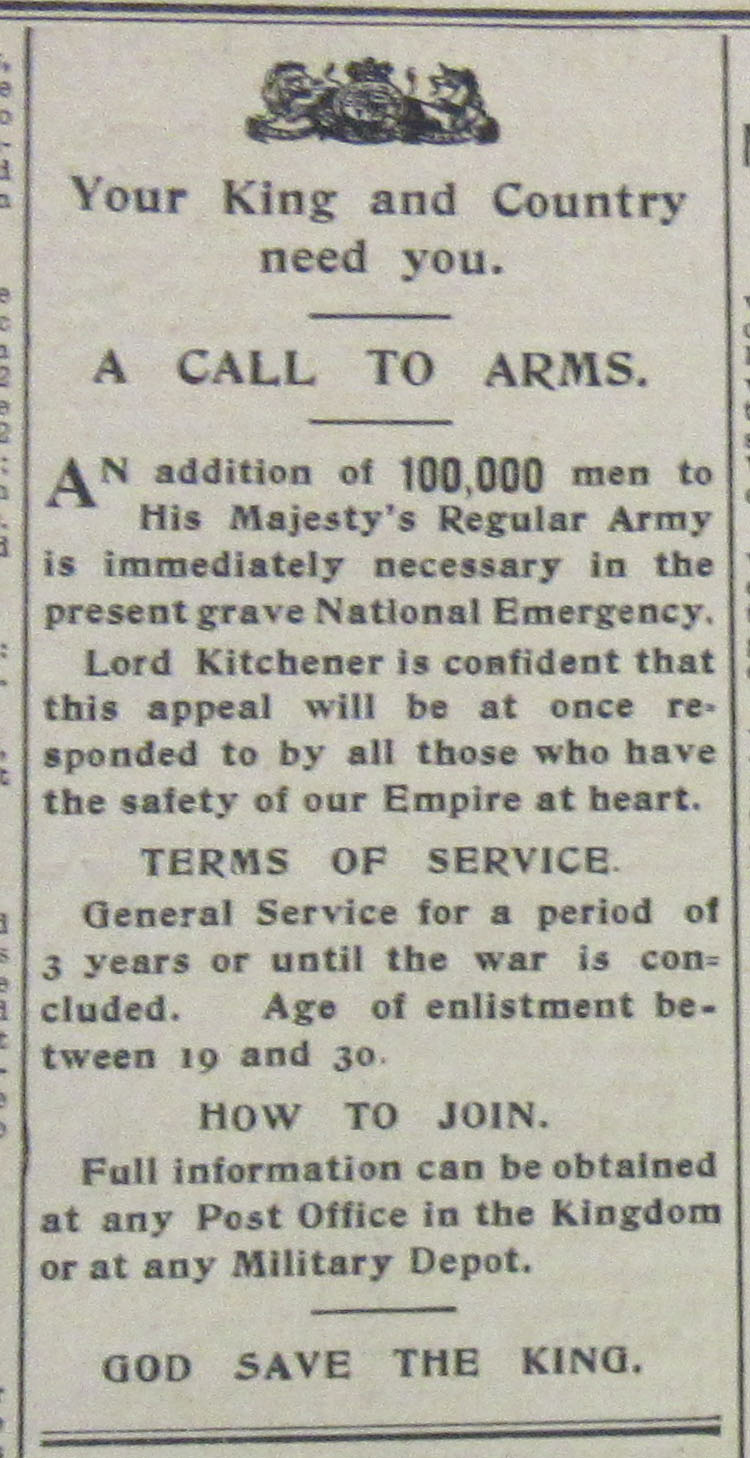
Britain did not have a history of conscription into the army so in August 1914 Lord Kitchener, the new Secretary of State for War, called for volunteers to join the army.

By the 14th August every local newspaper across Britain, including the St Neots Advertiser, was printing ‘A CALL TO ARMS’, which asked all men aged 19 to 30 to join up ‘in the present grave National Emergency’.

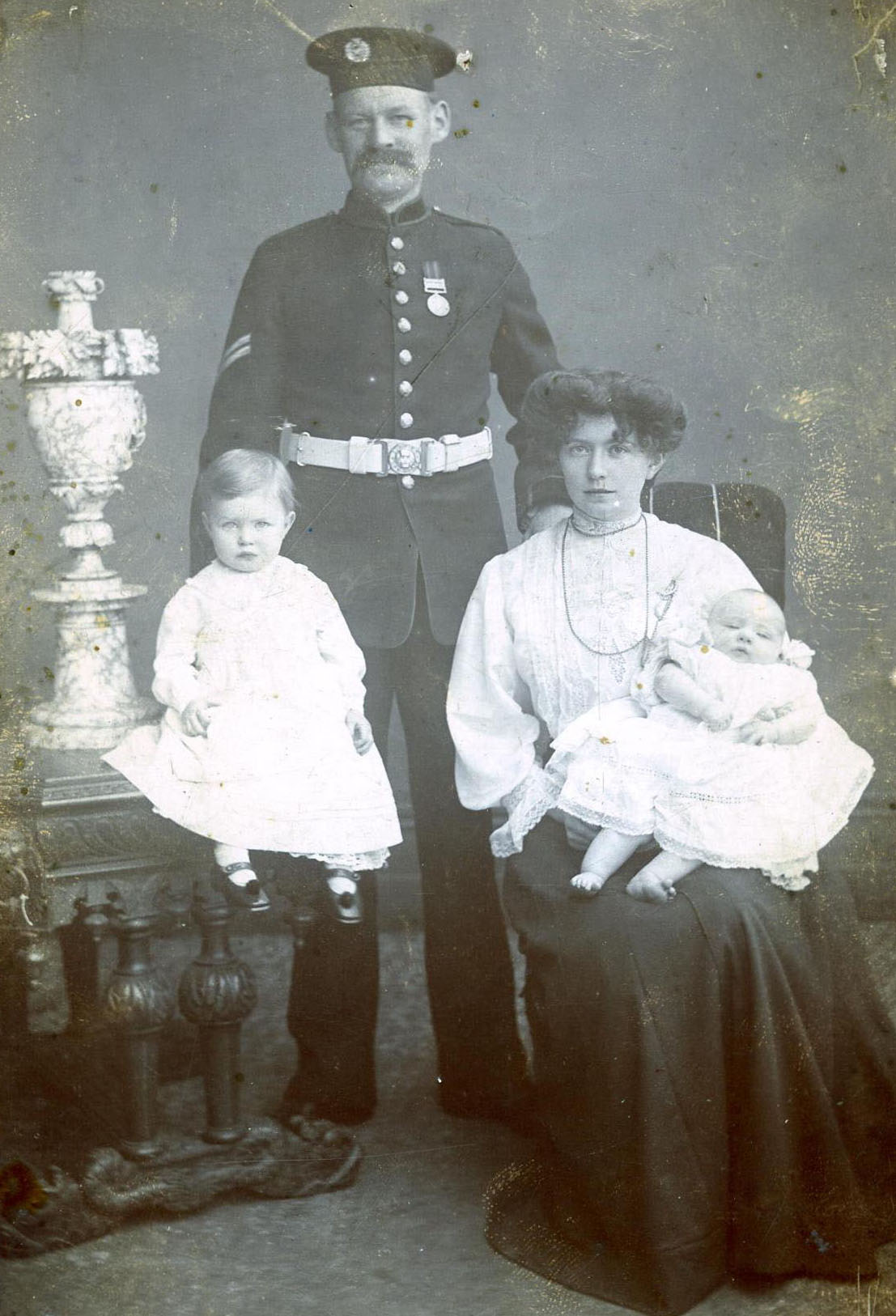
Many men who had already been professional soldiers re-joined the army. Alfred Chapman of Eynesbury had already served in the army from 1889 until 1907, fighting in the Boer War in South Africa. He re-joined in early 1915 and served until 1917, by which time he was 49 years old.

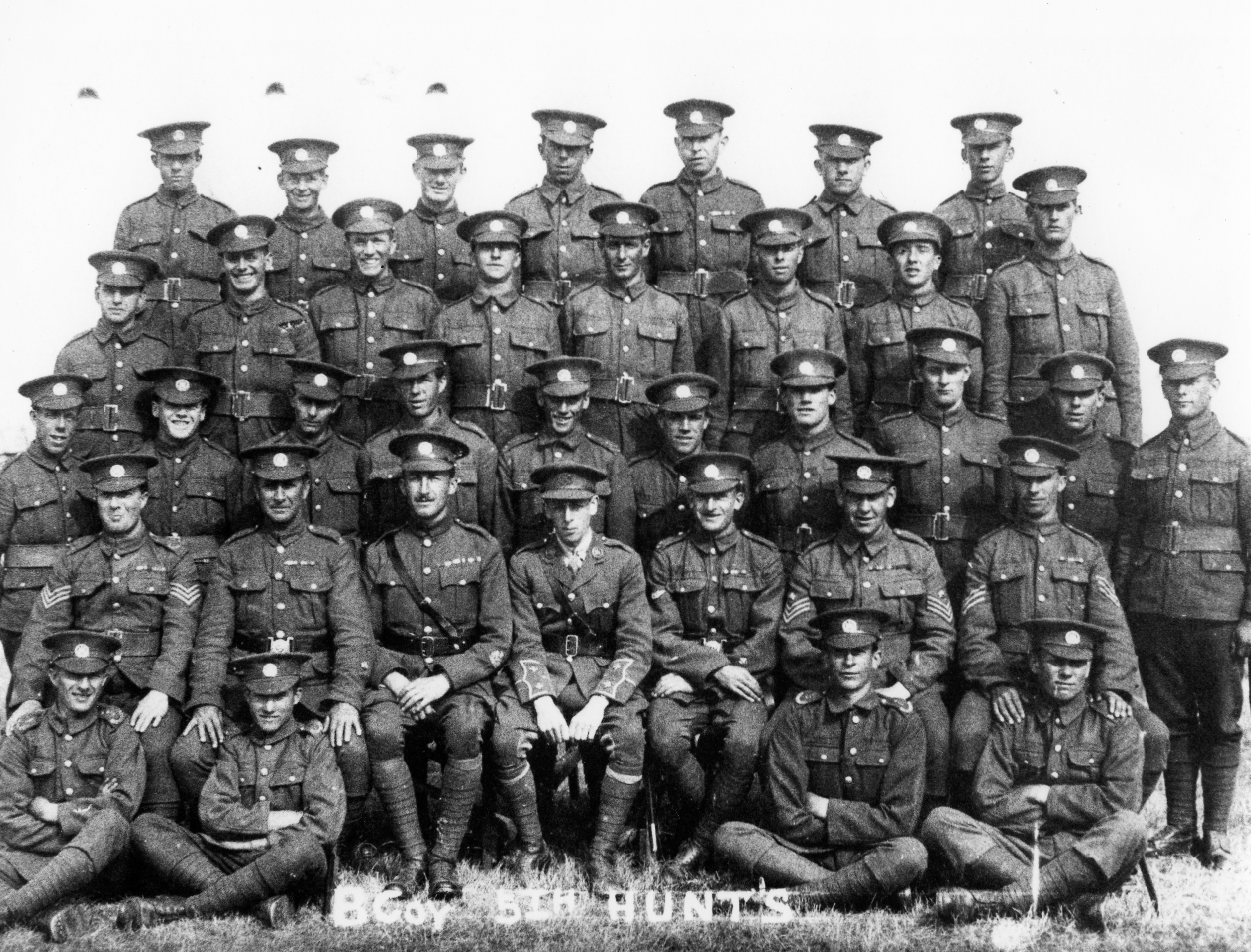
Many local men joined the local Huntingdonshire Cyclist Battalion.  Lord Kitchener did not intend to use his new volunteer recruits until they were fully trained (in 1915) and the Hunts. Cyclists were based in the Grimsby area where they began serious training to turn a battalion of volunteers into a fighting force.

St Neots Hospital Week Parade, Sunday 2nd August 1914

A Call to Arms advert, St Neots Advertiser, 14th August 1914

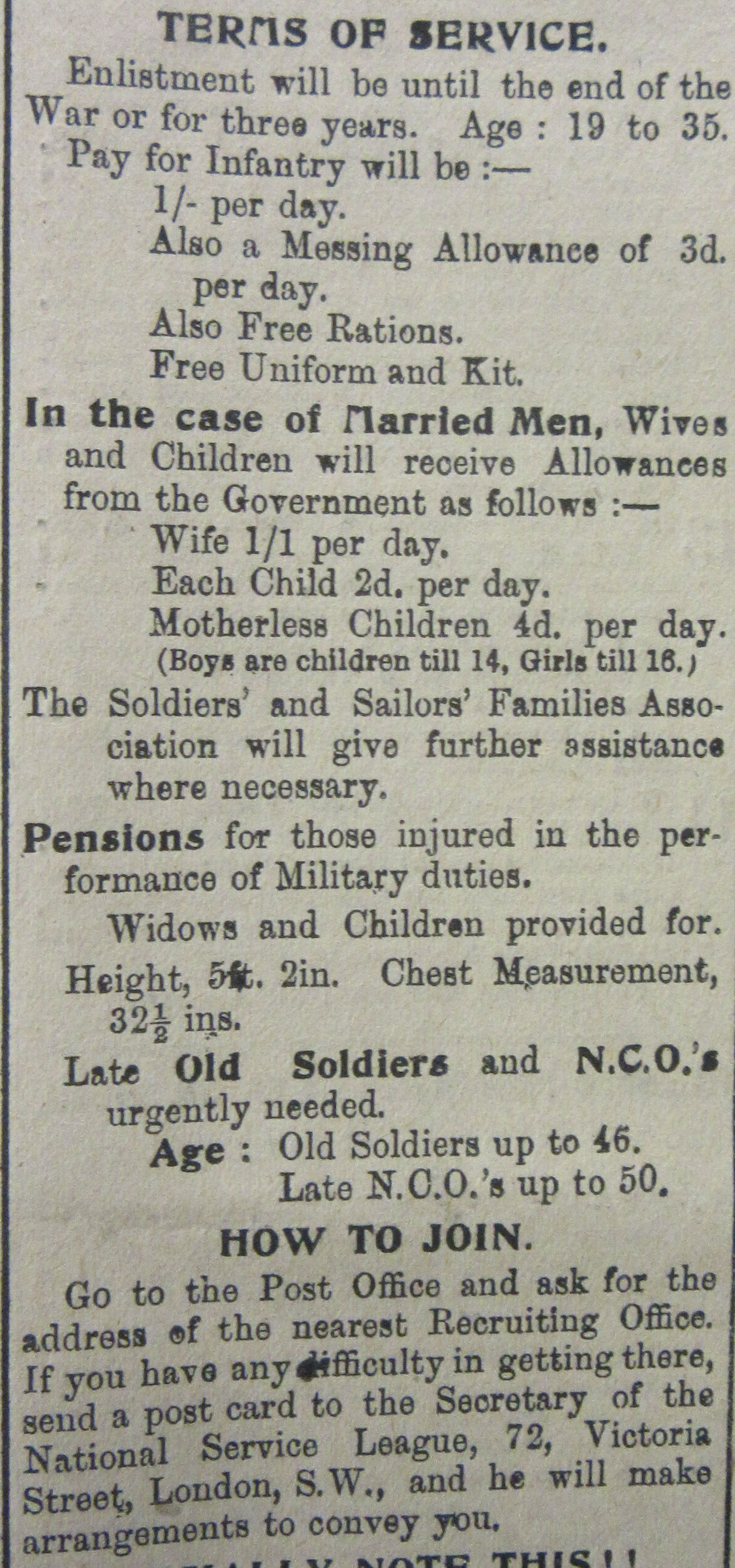
Armed Services Terms of Service, St Neots Advertiser 11th September 1914

‘B’ Company, 5th Huntingdonshire Cyclists, 1914

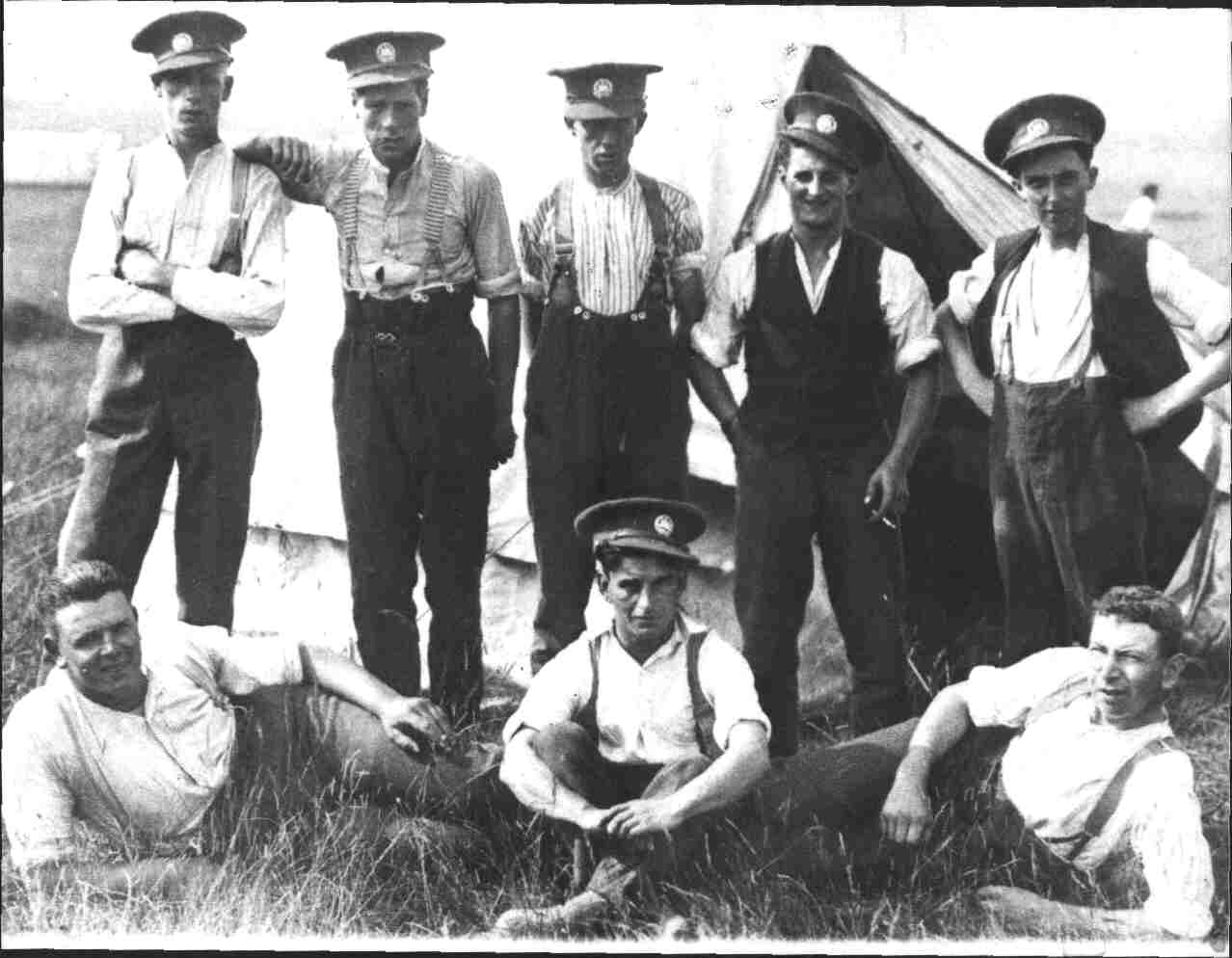
St Neots Volunteer Training Corps., summer camp around 1910

Professional soldier Alfred Chapman of Eynesbury with his wife and children, 1906


Originally designed by Alfred Leete as the front cover for the weekly magazine, ‘London Opinion’ 5th September 1914